 What is Zentangle?No, it isn't an elaborate form of origami yoga, but actually an abstract type of art, that is rapidly gaining popularity. It's mainly done with black on white, and relies of repeating patterns to create an organic-ish looking shape.
There, now that you've seen the introduction, and that intimidating drawing to the left, you're thinking this is another impossible tutorial that will leave you with a messy piece of paper and a deflated ego, and you are contemplating running away screaming, cursing your artistic (or lack of) talent. But not so fast!
This is actually a very easy art form, that is suitable for all levels (yes, even finger painters like you). Sure, you wont get to the standard shown above in one day, but if I can get snazzy looking results, then you should be at a Picasso stage in a week. :D
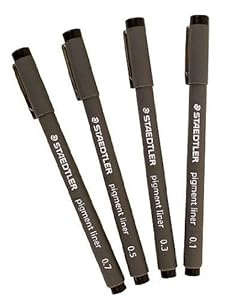 Supplies!!
Now, as I said, Zentangle is an easy hobby to start, as you can do it anywhere you want, for however long you want. It's basically a form of advanced doodling. The one thing you need is, is a set of pens. You don't need to get the hyper complex/competition standard box, as you'll be too scared to use them, but just some pens of variegating thickness. To begin with, use any old pens you find in your draw, just to see if you like the idea, but when you start making pictures and cards, it's best to go for a professional set.

So, what is this voodoo I keep talking about? Well, the real magic behind Zentangle is it's simplicity. You start with a very simple shape: maybe a line, a square or a dot, and then you repeat it until it creates a pattern. You usually finish with shading, to give it depth. Here are some examples.

As you can see, it all starts simply, and ends with a rather snazzy looking piece. These are "filler" tangles. You use them to pattern cavities, holes or objects. (The other type is a "stand alone tangle", that makes a good object/plant/item on its own.) You don't really need to know the different types, their names etc. as it's really just for classification.
Now, not to alarm you, but there are thousands and thousands of patterns each of them with their own names. Don't panic though, you don't need to know any of them, (although it helps to know a few) as you can just go freestyle on your own. To be frank, I've made up plenty of my own based off other patterns or things I see around me. It's a very relaxed hobby, so it doesn't matter either way.
 |
| An example of a tiled zentangle; the tangle is limited to the shape of the white card. |
Well, yes and no. You should be careful what type of Zentangle you start with; there's a relaxed approach and a more "confined" style. Some books stick to tiles; little white or black squares of a fixed size, and some just go more freestyle.
Consequently, there are many web tutorials and sites that show you the basics; they are very good if you want to just have a little taster. Here's a few I recommend. I'm not sponsored (I wish!), so these are just a few of my personal favourites.
What is Zentangle: A cheerful guide to zentangle, complete with a mini-tutorial. However, it can be a bit slow at times, but it does show you in more detail how to start with the line technique.
https://www.youtube.com/watch?v=uAYcB9pOWos
30 Patterns for Doodling: A basic, no frills video showing 30 different tangles. It starts with very basic ones, but then progresses onto more useful and interesting doodles.
https://www.youtube.com/watch?v=gldYsoTIun8
How to draw Mandala: A chatty tutorial of how to draw a form of zentangle, called a Mandala. It leaves you with a nice finished result, and informs you a bit about the meaning behind the Indian star. https://www.youtube.com/watch?v=zJzZlT7I2dM
How to: Zentangle: (My personal favourite) An informal and sweet guide about zentangle, showing you how to draw complex or interesting patterns, and then showing you a finished result. Very homemade, but sweet and useful anyhow. https://www.youtube.com/watch?v=-Ufz6l3W4Tw
How to: Zentangle: (My personal favourite) An informal and sweet guide about zentangle, showing you how to draw complex or interesting patterns, and then showing you a finished result. Very homemade, but sweet and useful anyhow. https://www.youtube.com/watch?v=-Ufz6l3W4Tw
 |
| Slowly start filling in your design |
They do sell actual cards, cut into the "right" size and made of the "right materal" but you can just use a notebook or a spare sheet of paper. It's good to go for a clean, proper piece, instead of on the back of a shopping list, as you then treat it with respect, and spend more time and care over it, then you would a waste scrap.
However, as you're just starting, then don't feel the need to enter into a shopping frenzy! This is just a test to see if you enjoy it. If you decide it's for you, you can see if you feel like buying all the "proper gear". But after several years of tangling, I still just use a plain notebook.
 |
| Start with a string. There are many styles, so just have fun with it. |
1. Start by drawing (in pencil) a box. Then, crisscross several lines in the box. You could go for a loopy design or a more straight one.
2. Then, start to fill in your segments with the filler designs. If you'd like to see a variety of choices, then click here. This takes you to an online encyclopedia of tangles, so you can pick and choose with ones to fill your tangle with. (It's best to start with a thin pen, fill in the dark spots with a thicker pen and shade with a pencil.)
You're done! I hope you enjoyed this brief introduction into Zentangle, and might think of attempting some small patterns in the future. Please comment below with your results, as any encouragement or advice will go a long way! Until next time, Girl of the Woods

No comments:
Post a Comment